The First Leaders and Historical Figures Ever Photographed
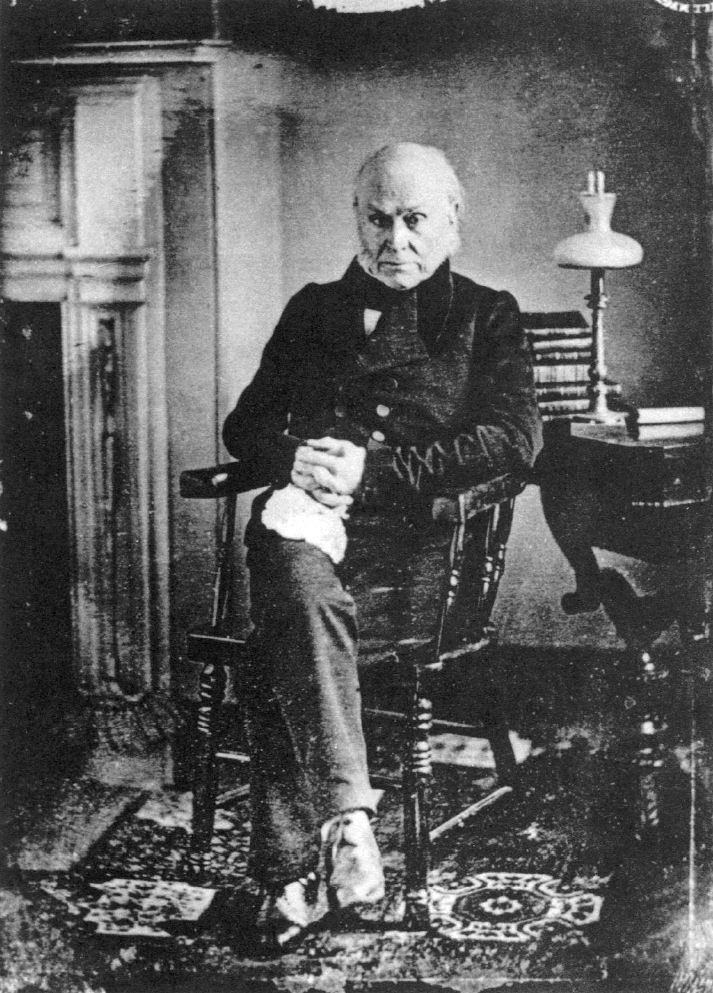
There's a specific moment when every figure of power stops existing only in paintings or in words and starts having a real face, fixed by a camera. Here are three firsts: the first US president ever photographed, the first reigning monarch ever portrayed, and the man who would become the most photographed person of the 19th century — not out of vanity, but out of strategy.
The first president ever photographed (1843)
John Quincy Adams was president of the United States from 1825 to 1829, long before photography existed as a usable technique. But in 1843, already 76 years old and fifteen years after leaving the White House, he sat for Philip Haas's camera in Washington for a daguerreotype — becoming the first American president, sitting or former, of whom an actual photograph survives. Adams would die five years later, in 1848, collapsing in the Capitol itself while serving as a congressman after his presidency. It is, literally, the exact point where US presidential history stops being documented only in oil paint and starts being documented in photosensitive silver as well.
The most photographed man of the 19th century (1840s-1890s)
Frederick Douglass, born into slavery and who became the most influential abolitionist in the United States, left nothing to chance in how the world saw him. He knew that newspapers and cartoonists of the era tended to depict Black men with deliberately distorted, degrading features, so he used photography — a still-new technique, and therefore uncontaminated by centuries of visual stereotype — as a deliberate political tool: he had himself portrayed with a serious, dignified expression, looking directly into the camera, sitting for more portraits than any other American of his century, surpassing even Lincoln. This 1847-52 portrait, by Samuel J. Miller, is among the earliest and is held today at the Art Institute of Chicago.
The first reigning monarch ever photographed (c. 1844-45)
Queen Victoria of the United Kingdom came to the throne in 1837, barely two years before Daguerre publicly unveiled his photographic technique. This image, from around 1844-45, shows her alongside her eldest daughter, the Princess Royal — and is considered the oldest surviving photograph of the queen. Over the following decades, Victoria would become a monarch deeply interested in photography: she collected thousands of portraits of herself and her family, and helped, not entirely on purpose, normalize the idea that royalty could — and should — let itself be seen by a camera.

Three different ways of using the same new technique
What's interesting about these three cases isn't just that they were "the first," but how differently each of them made use of the same newly invented tool: Adams let himself be photographed almost as an elder statesman's curiosity; Douglass turned it into a conscious political weapon against the racist caricature of his time; Victoria adopted it as a personal hobby that would end up changing how an entire monarchy related to its own public image. Same invention, three different strategies — the same pattern we still see today in how every person or brand chooses to use the digital image.
If you have photographs or documents you want to preserve in good quality without a huge file size,you can compress them here, right in your browser.