Historic Photographs That Changed the World
Some photographs don't just document a moment — they change it, or change how an entire moment is remembered afterward. These are four that truly did, with the real context of how they were taken, not just the image on its own.
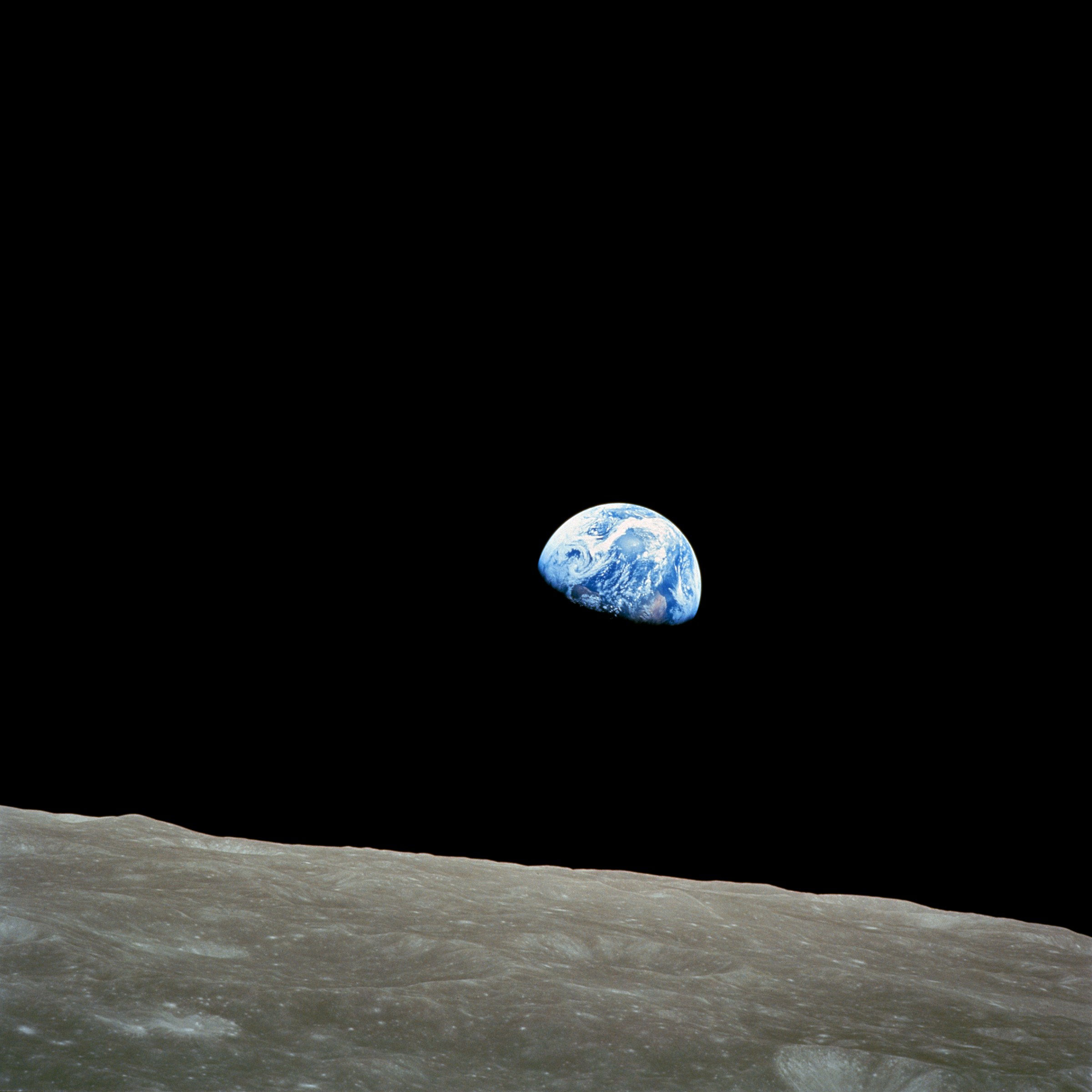
Earthrise (1968)
Astronaut Bill Anders took it almost by accident, on December 24, 1968, as Apollo 8 completed its fourth lunar orbit and the Earth emerged over the Moon's horizon. Photographing this wasn't part of the mission plan. Life magazine photographer Galen Rowell called it "the most influential environmental photograph ever taken" — it's credited with a direct role in launching the modern environmental movement, by showing for the first time the whole Earth as what it is: a small, fragile object isolated in the darkness, with no visible borders. The first Earth Day was celebrated barely 16 months later, in April 1970.

Migrant Mother (1936)
Dorothea Lange, a photographer hired by the US government's Farm Security Administration to document the Great Depression, crossed paths with 32-year-old Florence Owens Thompson at a migrant farmworkers' camp in California. Lange took six photographs in about ten minutes; this one, the last, showed Thompson with a distant gaze and two of her children burying their faces against her. Published immediately in newspapers, it sparked such public outrage that the government sent emergency aid to the camp within days. Thompson herself didn't know the photo had become iconic until decades later, and for years said she felt uncomfortable with a fame she never sought and was never compensated for.
The First X-ray (1895)
Wilhelm Röntgen, a German physicist, discovered an unknown radiation that passed through solid matter while experimenting with cathode-ray tubes. He tested it by photographing the hand of his wife, Anna Bertha — the result clearly showed her bones and her wedding ring, still visible on her finger. As the story goes, she looked at the image of her own skeleton and exclaimed, "I have seen my death" — the first documented reaction of someone literally seeing inside their own body. Röntgen received the first Nobel Prize in Physics ever awarded, in 1901, for this discovery, and never patented the technology, insisting it belong to all of humanity.

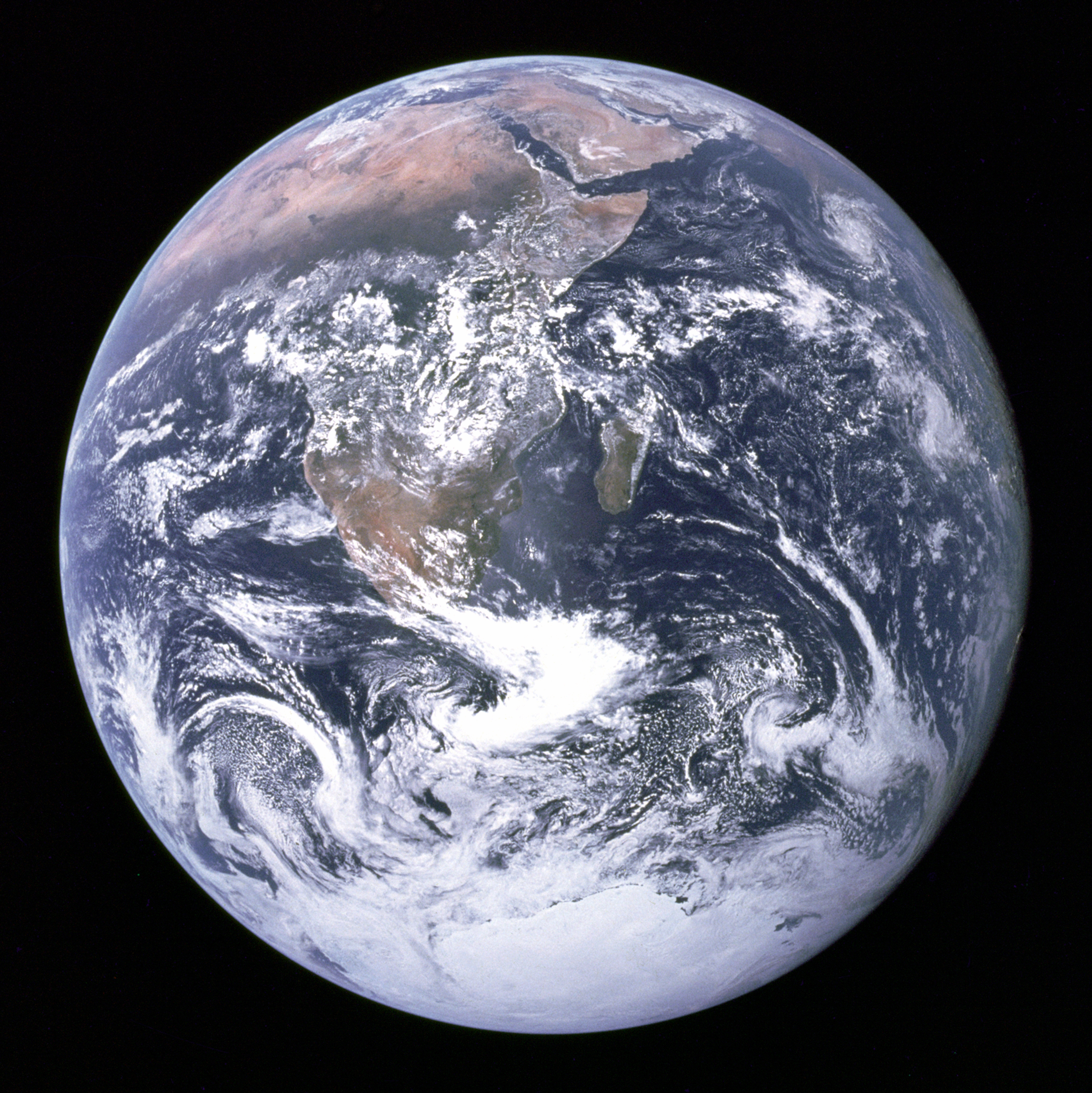
The Blue Marble (1972)
Four years after Earthrise, the crew of Apollo 17 — the last crewed mission to the Moon to date — took, from about 29,000 km away, the first photograph of the Earth fully illuminated from one pole to the other. It became the most widely reproduced image of Earth in history: it appears in textbooks, on environmental flags, and in the logos of countless environmental organizations. Unlike Earthrise, this one was deliberate — the crew knew exactly what they were photographing and why it mattered, which says a lot about how much environmental awareness had shifted in just four years.
Pale Blue Dot (1990)
At the explicit request of astronomer Carl Sagan, the Voyager 1 probe turned its cameras around just before leaving the solar system and photographed the Earth from more than 6 billion kilometers away — a point of light less than a single pixel in size, lost among bands of scattered sunlight. Sagan later wrote one of the most quoted passages on humanity's cosmic insignificance based on this exact image, summed up in his line "that's here, that's home, that's us." It's probably the photograph that has pushed the most people to rethink their place in the universe, and it doesn't even show anything recognizable to the naked eye unless you're told where to look.

Why these photos still matter
What connects these cases isn't just their technical quality — it's that each one captured, almost by accident, a moment that summed up something far bigger than the photo itself showed: the fragility of the entire planet, the human face of an economic crisis, the first time humanity literally saw inside itself. None of the people who took them knew, at the moment of the shot, that they were making history. That's part of what makes them genuine — it's precisely what sets them apart from the fake or manipulated photos covered in the other article in this series: they needed no staging at all to change how we understand a moment.
This archive survives because someone, at the time, took care in how they stored and shared it. If you want to take care of yours — compressing them without losing what matters —you can do it here, right in your browser.